



Brain Cancer
Understanding the causes and symptoms of brain cancer can lead to effective prevention and treatment, and improve survival rates.
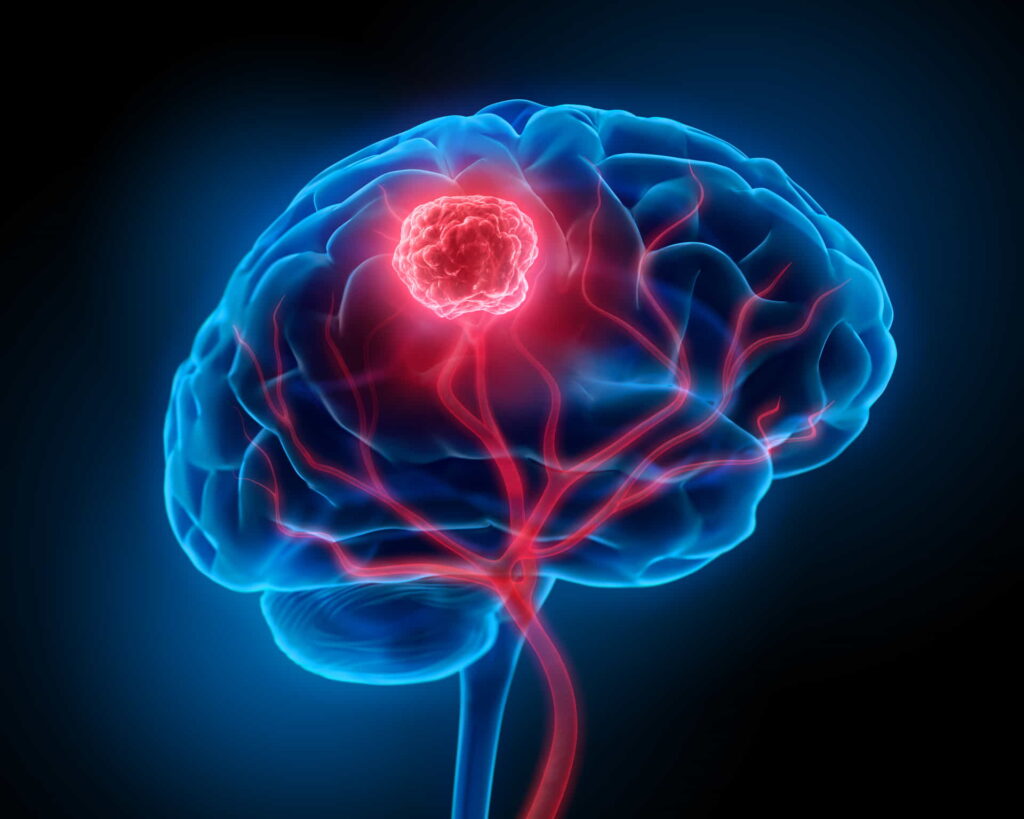
Brain cancer is uncommon in Hong Kong. It is a malignant tumor originating in the brain, and its causes are likely related to age, sex, genetics, and long-term exposure to or ingestion of chemicals. Symptoms of brain cancer are relatively difficult to detect, but once a brain tumor grows to a certain size, brain function will be affected to varying degrees, and diagnosis and treatment of brain tumors are more difficult than those of other cancers. Early detection and treatment are crucial for survival rates.
Because brain tumors are highly invasive and can spread rapidly, chemotherapy is often blocked by the brain's unique "blood-brain barrier," preventing it from being effective and causing brain cancer to recur, thus affecting survival rates.
Survival Rate for Brain Cancer
According to the latest data released by the Hong Kong Cancer Registry, of the 1,122 new cases of brain tumors, about 23.6% were malignant tumors (i.e., about 265 cases were brain cancer).
90%
Level 1 Two-Year Survival Rate
60%
Level 2 Two-Year Survival Rate
50%
Level 3 Two-Year Survival Rate
<30%
Level 4 Two-Year Survival Rate
Symptoms of Brain Cancer
The brain controls different parts of the body, so a patient's symptoms are closely related to the location of the tumor.
Some patients may be asymptomatic and the tumor may be discovered incidentally during a routine physical examination, while others may experience more than one symptom of brain cancer at the same time.
Increased Intracranial Pressure
- Frequent headaches: These are usually dull aches, and can be exacerbated by coughing, sneezing, or using the toilet.
- Projectile vomiting: Brain cancer can cause sudden and violent vomiting.
- Visual impairment: Blurred vision and seeing double may occur.
- Disorders of consciousness: caused by reduced cerebral blood flow and impaired brainstem function.
Other Symptoms
- Seizures: Almost any type of epileptic seizure can be seen in patients with brain tumors.
- Endocrine disorders: leading to abnormalities in growth, body shape, and sexual function.
- Localized neurological dysfunction: such as weakness in one limb, unsteady gait, and difficulty speaking.
Causes of Brain Cancer
The medical community has not yet determined the exact cause of brain cancer, but points out that it may be related to the following factors.
🕯️
Age
People of any age can develop brain cancer, but the risk is higher for those over 40
⚤
Gender
Men have a higher chance of getting the disease
🧬
Heredity
Someone in the family has had glioma
🧪
Long-term exposure to chemicals
People who are exposed to radiation for extended periods or work with chemicals have a higher incidence of illness
Brain cancer screening and evaluation
If a doctor suspects that a patient may have brain cancer, he or she will first conduct clinical examination andtumor assessment, computer scan, magnetic resonance scan, positron scan, angiography, spectrogram scan, brain biopsy and other tests. To assess whether a patient has brain cancer.
Clinical Physical Examination
Doctors need to have a detailed understanding of the patient's medical history, including the symptoms and their impact on their lives. This is especially important when examining the nervous system and understanding the history of the symptoms' development.
- The knee-jerk and other reflexes
- Muscle strength and tone of the hands and feet, and their response to needle pinching
- Brain tests by answering simple maths questions
- Vision examination by observing the optic nerve endings with a device to determine if the intracranial pressure is high
- Examine the eyes with an eye examiner for any swelling of the optic disc at the back of the eye, and carry out a comprehensive vision test.
- Hearing test
- Facial muscle test, including smiling
- Test the tongue movement and response by using a mouth gag to press down the tongue
Imaging tests
After the doctor conducts a preliminary examination on the patient, he will use imaging examinations and pathological analysis to evaluate whether the patient has brain cancer and even stage the brain cancer:
- Computed tomography scan (CT scan): CT Scan is a radiological imaging modality that involves the intravenous injection of an iodinated contrast agent to show the approximate location of the tumor and its effects.
- Magnetic resonance imaging (MRI) Magnetic resonance imaging (MRI) does not contain radioactive substances and can clearly display the details of the tumor with an accuracy of 90%. It can also help position and navigate radiation diagnosis and treatment in the future. Magnetic resonance scanning is particularly helpful in the evaluation of astrogliomas, and is also more accurate for tumors in the posterior fossa, especially brainstem tumors.
- Positron emission tomography (PET)It can show the metabolic activity of the cells and help to assess the type, grade, and degree of metastasis of the tumor. It is generally recommended for patients with metastatic tumors to track the location of the primary tumor.
Pathological Analysis
The most accurate and reliable method typically involves taking tumor tissue samples during surgery for pathological examination to determine the type and severity, known as a "tissue biopsy." However, sometimes when the tumor is deeply located or when the surgical risks are too high, a stereotactic biopsy may be considered to obtain tissue samples for pathological analysis. This approach is generally safer for patients, but the samples obtained may be relatively smaller.
Brain cancer diagnosis and treatment
The main treatment methods for brain cancer are combined with postoperative radiotherapy and chemotherapy.
- Radiology
Advanced radiation techniques are used to concentrate high-energy rays to destroy cancer cells, preventing their growth and spread. In recent years, more advanced radiation technologies, such as intensity-modulated radiation therapy and image-guided radiation therapy, have improved the dose of radiation delivered, effectively killing tumors while minimizing damage to surrounding healthy tissues.
- Chemotherapy
Chemotherapy involves using anticancer drugs to destroy cancer cells. A commonly used oral chemotherapy drug is temozolomide (TMZ), which can penetrate the blood-brain barrier to attack cancer cells. Studies have shown that patients receiving radiation therapy combined with TMZ post-surgery can significantly extend their survival rates.
- Tumor Treating Fields (TTF)
TTF is a novel treatment technology for brain cancer. Patients need to wear four electrodes on their scalp for at least 18 hours a day, creating an electric field that disrupts the cancer cells in the brain, preventing them from dividing normally and thus inhibiting their growth. This treatment can be used in conjunction with chemotherapy.
- Targeted Therapy
A commonly used targeted drug for treating brain cancer is Bevacizumab, a monoclonal antibody that targets vascular endothelial growth factor (VEGF). Its action involves inhibiting tumor angiogenesis, thereby cutting off the nutrient supply that tumors need to grow, ultimately suppressing tumor growth.
Recovery and Rehabilitation of Brain cancer
- Rehabilitation training: Some normal brain functions may be affected, such as speech, personality, movement, balance, or memory. If these functions are impaired, the patient may need physical and speech therapy. A series of rehabilitation exercises, along with maintaining a moderate level of physical activity and consistency, can help restore health.
Learn self-relaxation and stress-reduction techniques, such as listening to favorite music. Understanding one’s condition and treatment methods can help reduce unnecessary panic and increase confidence in treatment.
- Maintain a balanced diet, eat less irritating food, and quit smoking and drinking.
- Maintain a positive mindset, relieve stress, and learn self-relaxation and stress reduction techniques.
- Regular follow-up appointments as instructed by your doctor can help address any complications arising from the treatment promptly.
Brain cancer prevention
Protecting against brain cancer primarily involves eliminating risky environmental factors. Here are some suggestions:
- Self-protection for high-risk workers:People who are constantly exposed to pathogenic factors in environments such as chemical or nuclear industries should take self-protection measures such as wearing gloves, masks, and radiation protective equipment.
- Avoid excessive use of mobile phones:Although no conclusive evidence can prove that the heavy use of mobile devices is the culprit of brain cancer, excessive use should be avoided since electromagnetic waves may damage the human body
Brain Cancer FAQ
In the United States, the 5-year survival rate for patients with brain or central nervous system tumors is nearly 36%. The 10-year survival rate is nearly 31%. Age is a factor that affects general survival after evaluation for brain cancer or CNS tumors. The 5-year survival rate for people younger than 15 years is about 75%.
The brain is responsible for every body function including vision, hearing, speech and movement. As the tumor develops, it may compress and destroy the tissues that control these body functions. This can lead to complications such as headaches, seizures, vision and hearing loss, and equilibrium problems.
Hotline
-
Telephone Inquiry
New customer inquiry: 3001 5810
Existing customers: 2156 5838 -
WhatsApp inquiry
3001 5810 -
E-mail
enquiry@reviveonco.com.hk -
Opening Hours
Mon-Fri: 9:30am - 6:30pm
Sat: 9:30am - 1:30pm
Closed on Sundays and Hong Kong public holidays -
Mong Kok Clinic
12/F, Office Tower, Langham Place, 8 Argyle Street, Mong Kok, Kowloon
Fax: 3579 0153
EC Specialists Premium (PHF No.: DP000104)